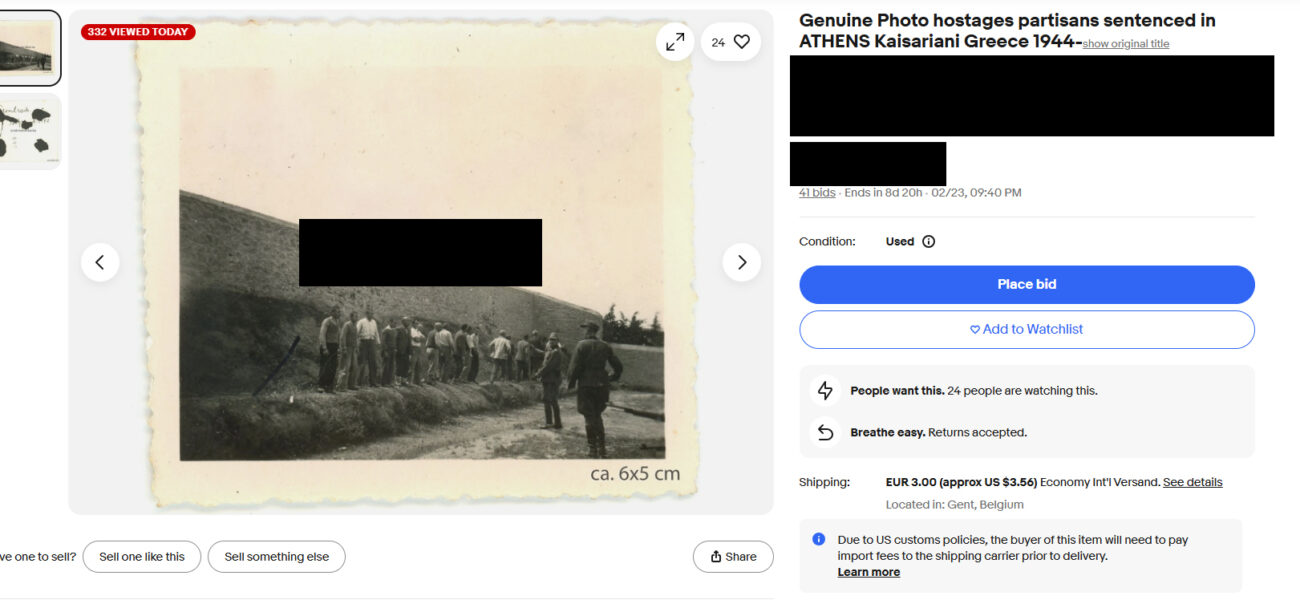
On 15 February 2026, the international news outlet Greek Reporter published an English-language article referring to the recent emergence of photographic material allegedly depicting the execution of the 200 political prisoners at the Kaisariani Shooting Range on 1 May 1944.
The article includes an English translation of the official statement issued by the project Actions for History, Memory and Culture and the platform mnemonikon.gr, concerning the online auction of the photographs.
The statement expresses serious concern regarding the commercial circulation of material that, if authenticated, constitutes historical evidence of immediate moral and documentary significance. It underlines that photographs of individuals being led to execution by the Nazi regime cannot be treated as neutral collectables or auction items, and calls for their safeguarding within a public, archival or institutional framework.
For the sake of completeness and transparency, we reproduce below the English translation of the statement as published by Greek Reporter.
Statement of the project Actions for History, Memory and Culture
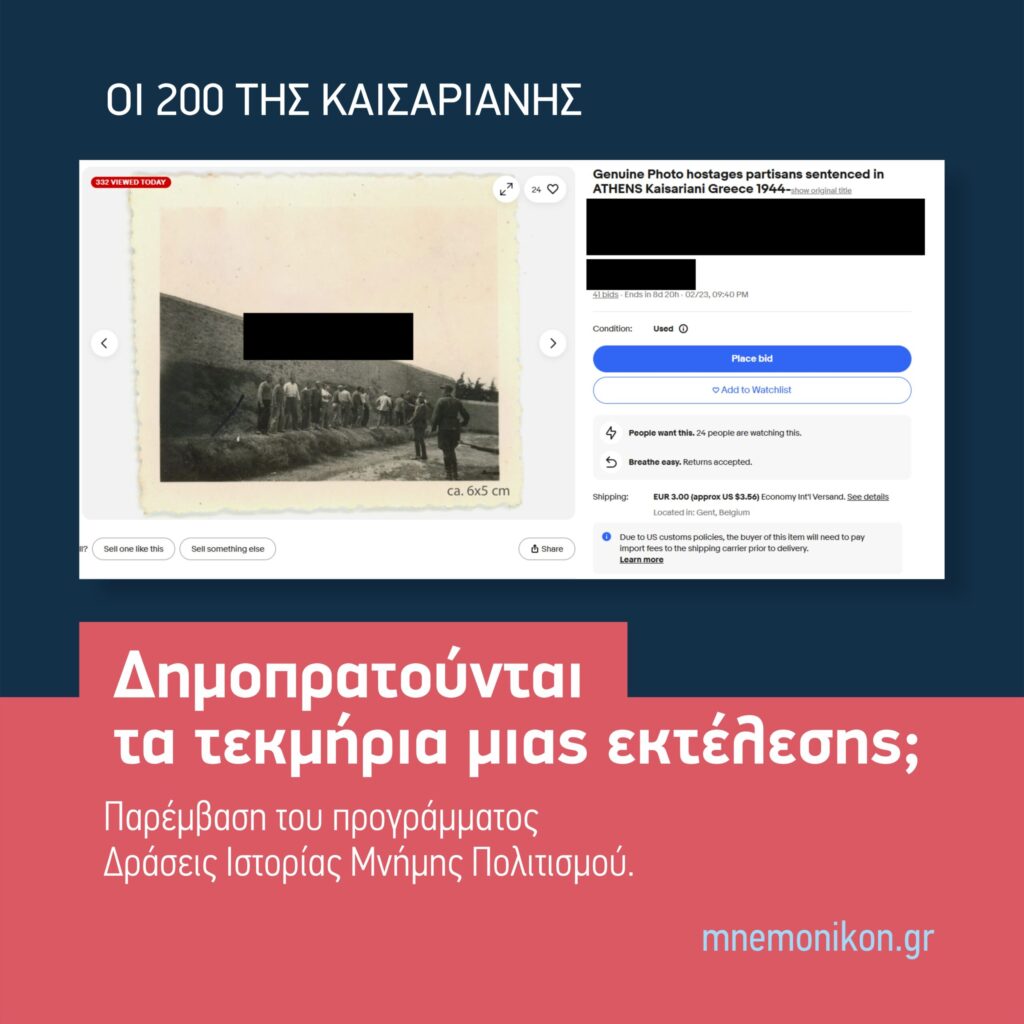
“The project Actions for History, Memory and Culture and the historical memory platform mnemonikon.gr express serious concern regarding the information that photographic material allegedly depicting the course of the execution of the 200 prisoners of the Haidari Camp on May 1, 1944, is being offered for sale in an online auction.
If the authenticity of the material is confirmed, these constitute documents of immediate historical and moral importance. These are not simply collectables, but photographic documents of individuals led to execution by the Nazi regime. Their commercial circulation as auction items raises a serious issue of respect for the victims and collective memory.
The management of such material cannot be left exclusively to market logic. It concerns institutional bodies, archives, museums and public services. It also concerns the families of the executed and society as a whole, which has a responsibility to protect the evidence of its history.
This responsibility also concerns political bodies historically linked to the 200 of Kaisariani, including the Communist Party of Greece, of which most of the executed were members, as well as the broader forces of the Left that have, over time, honoured and invoked their memory. This historical relationship entails institutional sensitivity toward the management of the relevant documents.
We call upon those who have an institutional, political or moral relationship with the 200 executed individuals of Kaisariani to consider immediate ways of safeguarding the material within a public or archival framework, so that it becomes accessible for scholarly research and documented presentation, rather than the object of private and commercial exploitation.
Documents of an execution cannot be treated as neutral market commodities. Their management must be governed by historical responsibility and institutional respect.
The project will continue to monitor developments and will return with further statements should new information emerge regarding the authenticity and provenance of the material.”
Last modified: 16 February 2026
[mc4wp_form id="5485"]